A repair is judged by the paint, because the paint is the only part of it most people can see. A panel that is structurally perfect but a shade off will bother you every time you walk up to the car, and it will show up in the resale appraisal.
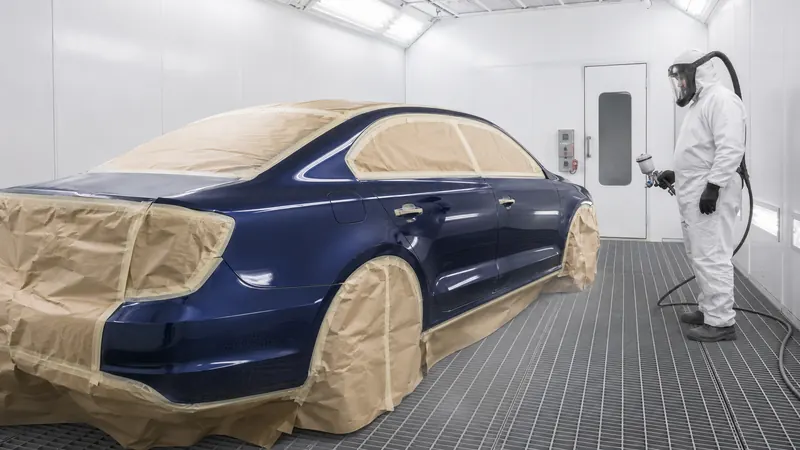
Why the paint code alone is not enough
Your vehicle has a paint code, and two cars with the same code can still be visibly different. Paint changes with sun exposure and age, and factory batches vary. Matching to the code alone produces a panel that is correct on paper and wrong in daylight.
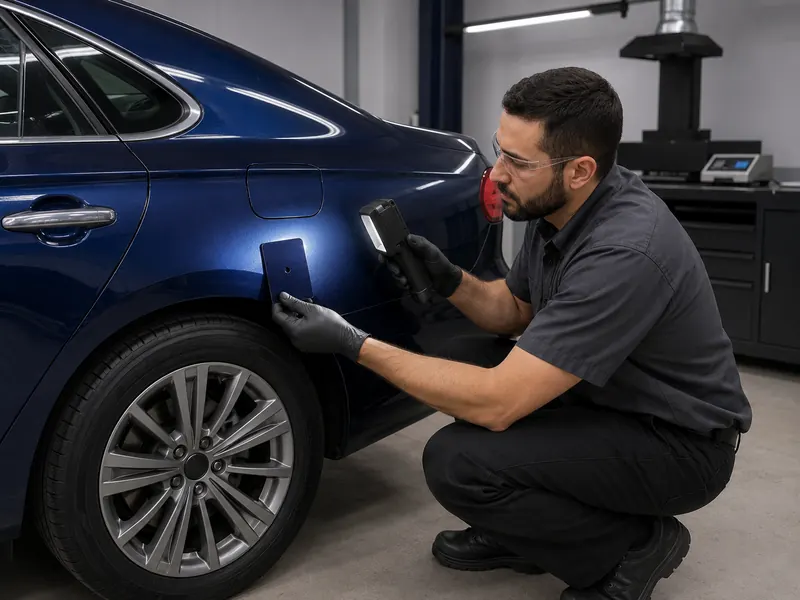
We mix with computer-aided formulation and match against your actual vehicle as it is today, then spray a test card and check it against the panel before anything is applied to the car.
Blending into the neighboring panels
On most repairs the new color is blended into the adjacent panels rather than stopping at the seam. A hard edge between old and new paint is where a mismatch becomes obvious. Blending moves the transition to a place your eye does not look for.
Why the booth matters
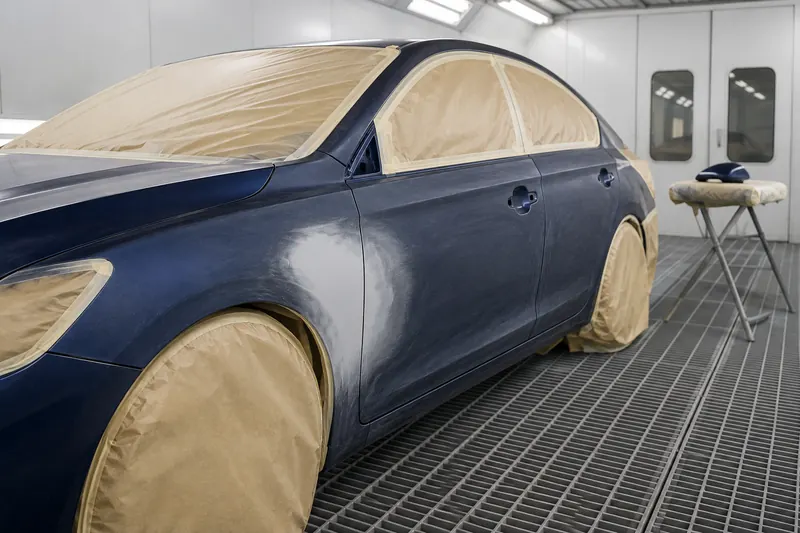
Paint cures differently depending on temperature, humidity and how much dust is in the air. We spray in climate-controlled booths so those variables stop being variables. It is the difference between a finish that still looks right in two years and one that does not.
Common questions
Will the new paint match my faded paint?
That is exactly what matching against the vehicle rather than the code is for. We compare to the panel as it is today and adjust the mix until the test card disappears against it.
Do you paint the whole panel or just the damaged spot?
It depends on where the damage sits and how the panel is shaped. Spot repair works on some panels; on others the correct result needs the full panel plus a blend into the neighbors. We tell you which one your car needs, and why, in the written estimate.
Get a free written estimate
Tell us what happened and we will tell you what the repair actually needs, in writing, with no obligation.